News

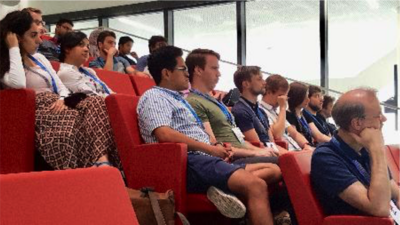
  • The summer school participants in the BrainLab auditorium

    Living out interdisciplinary science

    The Graduate School of BioEngineering (GSB) summer school brings together doctoral candidates from various departments at the Technical University of Munich (TUM). The scientists work in the fields of medical physics, medical informatics and robotics.

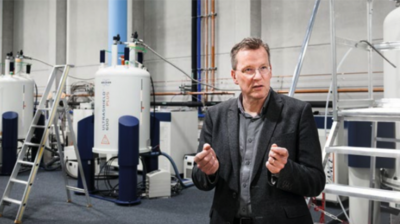
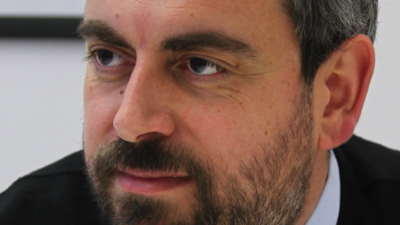
  • Michael Sattler at the BNMRZ.

    How proteins work – Article in TUM’s science magazine

    09 September 2019 | Faszination Forschung – the science magazine of the Technical University of Munich (TUM) – reported on the work at the Bavarian NMR Center (BNMRZ) at TUM. 

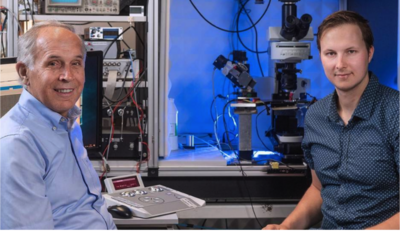
  • MSB-PI Vasilis Ntziachristos

    Radio feature about optoacoustic tomography (in German)

    04 September 2019 | German public radio (Deutschlandfunk) reported on the work of MSB-PI Vasilis Ntziachristos and his colleagues at the TUM professorship of Biological Imaging and the Institute for Biological and Medical Imaging at the Helmholtz Zentrum München.

  • Mechanism of new small molecule inhibitors for the treatment of depression, pain and obesity decoded

    27 August 2019 | Researchers at TUM and the Helmholtz Zentrum München have moved a step closer towards developing innovative drug molecules for the treatment of psychiatric diseases. They discovered how inhibitors inactivate a special protein that plays a key role in various diseases. Their approach can be applied to other medically relevant proteins where the development of specific inhibitors has proved difficult up to now. The research effort was led by Michael Sattler, Director of the Institute of Structural Biology at the Helmholtz Zentrum München and Professor of Biomolecular NMR-Spectroscopy at TUM as well as Principal Investigator at the MSB.

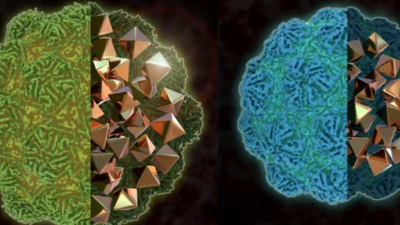
  • Two kinds of nanocompartments with different sizes that contain metal particles and thus can be easily distinguished in an Electron Microscopy.  Image: B. van Rossum / FMP

    Shape is the new color

    08 August 2019 | Self-assembling nanoparticles mark cells in electron microscopy.

  • Machine learning-based software scGen predicts cell behavior

    AI extrapolates from mice to humans

    08 August 2019 | The scGen computer model, developed by scientists at the Technical University of Munich (TUM) and Helmholtz Zentrum München, predicts how cells will behave. The software uses artificial intelligence to model the response of a cell to a disease or treatment – with no need for experimental data from pertubed human cells.

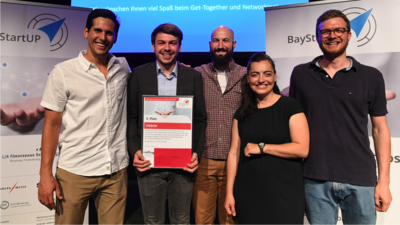
  • The Orbem Team. Image: BayStartUP

    MSB start-up wins third prize in Munich Business Plan Competition

    In the Munich Business Plan Competition, the third prize went to the company Orbem, a start-up founded at the Munich School of BioEngineering. Orbem has developed a method for identifying the sex of poultry embryos still in the egg. The first and second spots were also claimed by start-ups incubated at the Technical University of Munich (TUM).