News Biomaterials & Biomolecular Systems

  • The DNA origami switch can be toggled by an electric field within milliseconds. Image: Astrid Eckert / TUM

    Robust electrically controllable DNA switch developed

    Programmable molecular machines are getting closer

    03 July 2026 | The development of programmable molecular machines is moving closer. Researchers at TUM have now developed an extremely reliable and stable DNA switch. It can be controlled electrically and used to regulate molecular functions.

  • Image: Andreas Heddergott / TUM

    Tool for better control of stem cell development

    Reading genetic activity from living cells without destroying them

    05 May 2026 | Until now, studying the genetic processes in cells required destroying them - making it impossible to observe these processes over extended periods of time. A team from TUM and Helmholtz Munich has developed a new method to repeatedly obtain up-to-date genetic information from living cells.

  • moma future: Robots train stem cells. Image: ZDF

    Media tip: ZDF Moma Future

    Nanorobots train stem cells
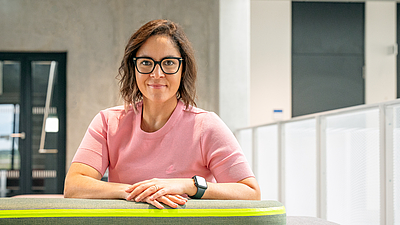
    24 March 2026 | Researchers at TUM are using nanorobots to reliably and precisely transform stem cells into bone cells. Berna Özkale Edelmann and Chen Wang explain to Moritz Neuß from ZDF Moma Future how this works.

  • Prof. Berna Özkale Edelmann, together with researchers at her Microrobotic Bioengineering Lab at the Technical University of Munich (TUM), developed a system in which stem cells can be transformed into bone cells through mechanical stimulation. Image: Astrid Eckert / TUM

    New method for the targeted production of specific cells

    Nanorobots transform stem cells into bone cells

    11 November 2025 | For the first time, researchers at TUM have succeeded in using nanorobots to stimulate stem cells with such precision that they are reliably transformed into bone cells. To achieve this, the robots exert external pressure on specific points in the cell wall. The new method offers opportunities for faster treatments in the future.

  • Students from the iGEM Munich team in the laboratory: They presented the concept of a biosensor tattoo at the iGEM competition. Image: Astrid Eckert / TUM

    Student Club iGEM

    A tattoo as biosensor
    04 November 2025 | At the iGEM competition in Paris, high school and collegiate teams from around the world compete against one another with their synthetic biology research projects. TUM students were onboard again in 2025. They won a gold medal with their concept for a tattoo that monitors health-related parameters.

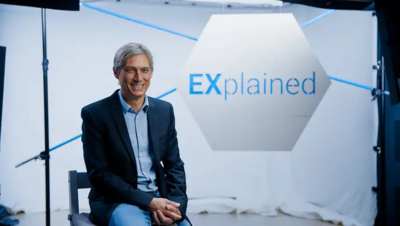
  • An engineering approach to biology in EXplained: BioSysteM with Friedrich Simmel. Image: TUM

    EXplained: BioSysteM with Friedrich Simmel

    An engineering approach to biology
    19 September 2025 | In the TUM "EXplained" video series, the seven Clusters of Excellence with which TUM will enter the next funding phase of the Excellence Competition are showcased. First up is the new cluster BioSysteM, represented by TUM biophysicist Prof. Friedrich Simmel, who is also a PI at MIBE.

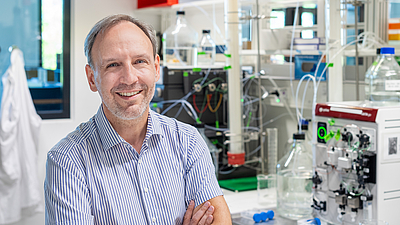
  • Prof. Oliver Lieleg in the lab

    Hollow microparticles for cargo molecules

    Slime as a material for multifunctional spheres
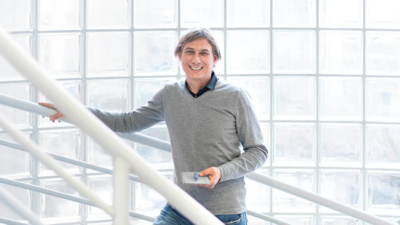
    05 September 2025 | Prof. Lieleg and his team have developed hollow microspheres made of mucus and polydopamine using a simple and scalable production method. These tiny spheres are intended to serve as packaging for therapeutic substances, for example in joints or on the oral mucosa.

  • Biophysicist Prof. Dr. Friedrich Simmel, TUM spokesperson for the BioSysteM Cluster of Excellence. Image: Stefan Woidig / TUM

    Prof. Friedrich Simmel on the new BioSysteM Cluster of Excellence

    "Thinking of biology as technology"
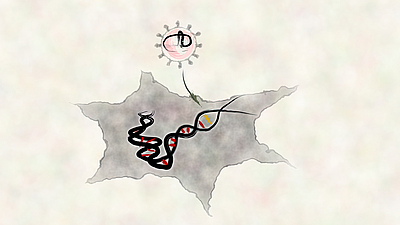
    20 June 2025 | The BioSysteM Cluster of Excellence aims to develop self-organizing molecular and cellular systems with programmable, life-like properties. Spokesperson Prof. Friedrich Simmel explains in an interview why the involvement of society is crucial in this context.

  • Artistic depiction of the new transport system ENVLPE delivering a gene-editing tool towards a recipient cell.

    Engineering Smart Delivery for Gene Editors

    17 April 2025 | New system enables more efficient and precise gene editing and could help make cancer immunotherapies more accessible.

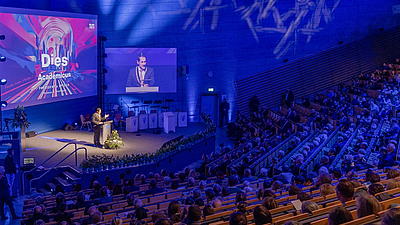
  • The Dies Academicus 2024 in the TUM Audimax with around 1000 guests. Image: Andreas Heddergott / TUM

    Dies Academicus under the motto "Facta non verba - deeds instead of words"

    TUM celebrates a successful 2024

    06 December 2024 | TUM celebrated the end of an extraordinarily successful 2024 with the Dies Academicus. Students, employees, and partners of TUM, including Prof. Hendrik Dietz and Prof. Oliver Hayden, PIs at MIBE, gathered in the Audimax at the main campus in Munich under the motto "Facta non verba" - deeds instead of words.